Capacity lies.
That is the ugly truth behind many Pick and Place Machine purchases. A vendor demo board runs smoothly, the quoted CPH looks heroic, and the buyer imagines the bottleneck disappearing the moment another machine lands on the floor. But in real SMT production, the machine is only one actor in a crowded system: printer, SPI, feeders, nozzles, operators, reflow, AOI, maintenance, scheduling, and material control all get a vote.
So when should we add a second or third unit? My answer is blunt: add the second when placement is the measured bottleneck across normal production, not during one chaotic week. Add the third only when your product mix, feeder discipline, labor model, and upstream/downstream equipment can support a multi-machine architecture without creating a new queue somewhere else.
Why Adding Machines Is Usually Misunderstood
A second machine is not a trophy. It is a confession.
It says your current SMT line has moved from “operator-controlled pressure” into “structural capacity limit.” That distinction matters because many factories buy too early. They blame the mounter because it is visible, loud, and expensive, while the real constraint sits elsewhere: solder paste printing instability, poor feeder staging, missing nozzles, slow program changeover, or AOI backlog.
Market pressure makes this worse. In October 2024, Reuters reported that Foxconn’s Q3 revenue rose 20.2% year over year to T$1.85 trillion, driven by AI server demand while consumer electronics remained flat. That is the exact demand pattern that punishes weak capacity planning: one product category surges, another stalls, and factories discover their “balanced” SMT line was balanced only in a spreadsheet. Reuters reported the Foxconn revenue surge.
IPC’s July 2024 electronics supply-chain sentiment also pointed to a factory-floor contradiction: demand softened, but capacity utilization was expected to rise, while margins, backlogs, and recruitment pressure remained uncomfortable. In plain language, plants were being asked to produce more intelligently, not merely buy more machinery. IPC’s July 2024 electronics supply-chain report captured that tension well.
This is where many teams fool themselves. They ask, “How fast is the machine?” They should ask, “Where does time actually disappear?”
The Numbers That Tell You a Second Unit Is Justified
A second Pick and Place Machine is justified when placement consumes a dominant share of real line cycle time after basic process waste has already been removed. I usually want to see placement taking roughly 55–65% of the total effective line cycle across repeat jobs before I take the purchase argument seriously.
Not brochure speed. Actual speed.
The four numbers I would demand before approving another unit are:
| Metric | What It Reveals | Warning Sign |
|---|---|---|
| Actual placements per hour | True machine output under real product mix | Output is far below quoted CPH |
| Changeover minutes per job | Setup burden and product-mix friction | Changeover consumes 25–35% of shift time |
| Feeder setup error rate | Material-control discipline | Frequent wrong-reel, missing-reel, or splice issues |
| Waiting time before/after placement | Whether placement is truly the bottleneck | Boards wait at printer, reflow, or AOI instead |
The second unit makes sense when placement is overloaded and the rest of the line is ready to feed it. If the printer is unstable, the oven is overloaded, or AOI is choking, another placement machine simply moves the bottleneck downstream.
For volatile builds, the smarter first move may be a flexible configuration such as Прототипы и мелкосерийные линии SMT, where setup discipline matters more than raw placement speed. For stable volume, the logic shifts toward высокоскоростные линии SMT для массового производства, where takt time, feeder strategy, and repeatability dominate.
Different worlds. Same factory, sometimes. That is the problem.
Where Multiple Pick and Place Machines Actually Pay Off
Multiple pick and place machines work best when they are not treated as identical twins. The highest-return setups usually split work by product family, component class, or placement role.
One machine may handle high-speed chip placement. Another may handle fine-pitch ICs, BGAs, odd-form parts, or products with heavier verification requirements. In high-mix environments, this split can reduce feeder disturbance, shorten head travel, simplify program logic, and keep recurring jobs from being rebuilt from zero every shift.
That is real SMT Line Optimization. Not motivational language. Routing logic.
For buyers comparing options, a broad review of Машины для подбора и размещения оборудования should be tied to board-level data: component count, feeder count, package mix, placement accuracy, board dimensions, nozzle requirements, software workflow, and expected uptime. The best Pick and Place Machine for PCB assembly is not always the fastest one. It is the one your operators can keep productive after three engineering changes, a missing 0402 reel, and a customer asking for shipment acceleration before lunch.
For mixed-demand factories, смешанные линии SMT are often more honest than pure-speed line designs. A plant building industrial controls on Monday, LED drivers on Wednesday, and AI-server subassemblies on Friday does not need fantasy throughput. It needs controlled flexibility.
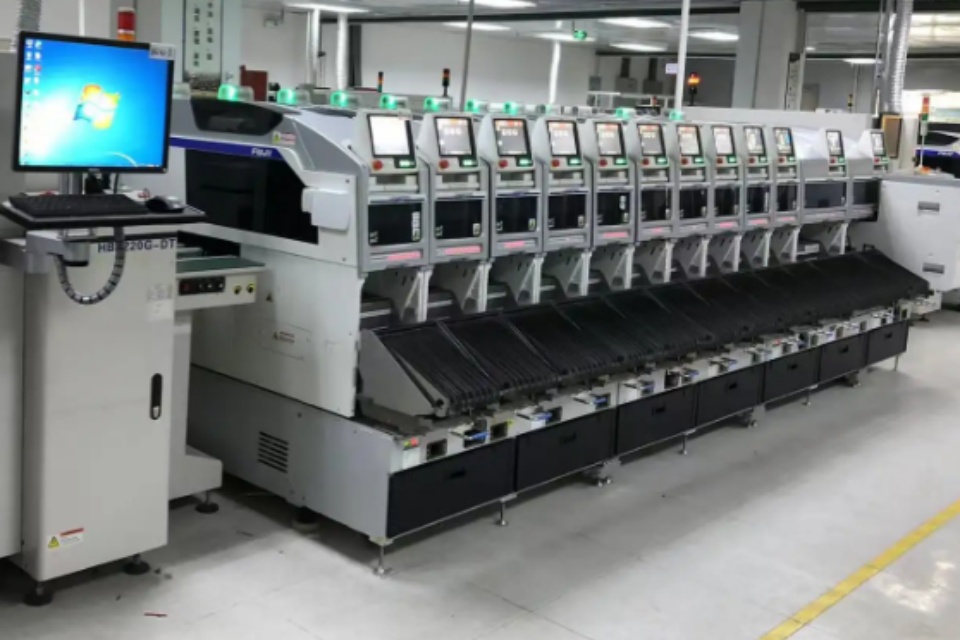
Second vs Third Pick and Place Machine: Decision Matrix
The second machine is about relief. The third is about architecture.
That line matters because the approval logic changes. A second unit may rescue a line from chronic placement overload. A third unit should reshape production flow, product routing, maintenance coverage, and feeder allocation. If it does not, the third machine becomes expensive floor decoration with a service contract.
| Decision Signal | Add Second Unit? | Add Third Unit? | What Usually Goes Wrong |
|---|---|---|---|
| Placement exceeds 60% of real line cycle time | Yes, if repeated across product families | Maybe, if two units still exceed takt | Printer, AOI, or reflow becomes the next bottleneck |
| Changeovers exceed 25–35% of shift time | Maybe, but fix setup first | No, unless product families can be separated | You multiply changeover chaos |
| Feeder count is maxed out on recurring builds | Да | Yes, if feeder assets can stay dedicated | Feeder carts and inventory are underfunded |
| Overtime is tied directly to placement capacity | Да | Maybe, after labor model is stable | More machines without more skilled operators |
| Demand spike comes from one temporary customer program | Not automatically | Almost never | Capex follows forecast optimism |
| Two machines already run above 80% real utilization | No, if upstream/downstream cannot match | Yes, if full-line flow is stable | Conveyor, SPI, AOI, and reflow queueing |
| Product mix includes fast passives plus complex ICs | Yes, split by placement role | Yes, for role specialization | Poor program split kills the benefit |
SEMI’s 2024 equipment data supports the broader investment pattern. The organization reported strong growth in test and assembly/packaging equipment sales, with AI and high-bandwidth memory complexity pushing spending toward throughput protection and process capability. That does not directly tell you to buy another SMT mounter, but it does show where serious electronics manufacturing investment is moving: complexity management, inspection, backend capability, and controlled output—not just more machines for the sake of volume. SEMI’s equipment forecast gives the broader capex context.
The Hidden Costs Nobody Prices Correctly
The purchase price is the clean number. The dirty numbers come later.
A second or third Pick and Place Machine brings feeder cost, nozzle inventory, spare parts, maintenance contracts, floor-space changes, operator training, software/programming workload, electrical and air requirements, carts, offline setup tooling, and more QA pressure. If those are missing from the ROI model, the ROI model is fiction.
This is why Решения для линий SMT под ключ can be more rational than bolting another mounter into a line that was never designed for multi-machine flow. The machine head gets attention, but the system around it determines whether the investment pays back.
I would also insist on training before expansion, not after the first crisis. Multi-machine production depends on operators who understand feeder logic, nozzle wear, placement drift, calibration routines, recovery procedures, and program verification. Обучение и послепродажная поддержка is not a nice extra here. It is risk control.
The third unit, especially, requires proof. I would want to see at least several months of stable utilization above 80% on two existing machines, product families that can be routed cleanly, standardized feeders and nozzles, verified AOI/reflow capacity, and demand supported by orders—not sales optimism.
Without that, no.
Вопросы и ответы
When should I add a second pick and place machine? A second pick and place machine should be added when placement is repeatedly the measured bottleneck, typically consuming more than half of real line cycle time after changeover, feeder staging, printer stability, and reflow capacity have already been improved. The decision should be based on production logs, not stress from one peak week.
In practical terms, I would look for sustained placement utilization above 75–80%, overtime tied directly to machine capacity, and a clear product split that lets the second unit reduce queueing instead of creating new setup confusion.
When should I add a third pick and place machine? A third pick and place machine should be added only when two existing machines are already balanced, highly utilized, and supported by stable demand, trained operators, feeder assets, spare parts, and upstream/downstream equipment capacity. It is a line-design decision, not a simple speed upgrade.
The third machine works best when each unit has a role: high-speed passives, precision ICs, overflow, or product-family-specific production. If every job still runs through the line randomly, a third unit will usually magnify scheduling problems.
How do multiple pick and place machines improve SMT production line throughput? Multiple pick and place machines improve SMT production line throughput by splitting placement work across specialized units, reducing head travel, lowering cycle time per board, and allowing product-family routing that keeps feeder setups more stable. The gain appears only when the rest of the SMT line can support the higher output.
That final condition is the trap. If printing, inspection, reflow, or material handling cannot keep pace, the extra placement speed becomes trapped inventory between process steps.
What is the biggest mistake in pick and place machine capacity planning? The biggest mistake in pick and place machine capacity planning is using advertised CPH as the investment trigger instead of actual factory output, including changeovers, feeder errors, maintenance, waiting time, board complexity, and operator availability. Brochure speed is a laboratory figure; shipment capacity is a production figure.
A messy OEE sheet is more useful than a polished vendor slide. The sheet shows where the line bleeds time.
Is the best pick and place machine for PCB assembly always the fastest one? The best pick and place machine for PCB assembly is not always the fastest model; it is the machine that matches your component mix, placement accuracy, feeder count, board size, software workflow, service access, and operator skill level. Speed matters, but fit determines real output.
A slightly slower machine with strong setup control can outperform a faster machine that spends too much time idle, misfed, or waiting for program recovery.
How can I increase SMT line throughput before buying another machine? You can increase SMT line throughput before buying another machine by reducing changeover time, improving feeder staging, standardizing nozzles, optimizing placement programs, stabilizing solder paste printing, balancing reflow capacity, and tracking downtime by cause. These fixes often reveal whether another machine is truly needed.
Do this first. Then buy with evidence.
Plan the Expansion Before You Buy
Multi-machine strategy is not about owning more equipment. It is about knowing where time leaks, where demand is durable, and where the next bottleneck will appear after placement gets faster.
A second unit can be the right move when your current machine is structurally overloaded. A third can be powerful when your line is mature enough to assign machines by role and protect flow across printing, placement, reflow, and inspection. But buying before the data is clear is not bold. It is just expensive.
If your production logs show that placement is the next true constraint, review available Pick and Place Machine options или связаться с командой with your board mix, monthly volume, component count, feeder requirements, and current cycle-time data. The right question is not “How fast is the machine?” It is “What happens to the whole SMT line after we add it?”