The stove decides.
A pick and area equipment might control the sales presentation with placement prices, feeder matters, vision systems, and micron-level accuracy insurance claims. But the ended up setting up is judged only after solder paste has thawed, components have actually shifted under surface area tension, intermetallic layers have actually developed, and the board has actually cooled down.
So which machine controls the line?
Neither one. The SMT assembly procedure is controlled by the relationship between printing, placement, transportation, buffering, reflow, examination, and data. Treat those machines as separated acquisitions and the outcome is foreseeable: impressive specific specs, weak real result, and engineers dealing with faults that were designed into the line.
I would certainly reject any kind of SMT proposal that prices estimate just elements per hour. The metric that issues is continual great boards per hour without starving, obstructing, misprocessing, or repeated driver treatment.
Why Select and Place and Reflow Assimilation Matters
Pick and position and reflow integration is the control of board transfer, product identification, manufacturing dishes, cycle time, positioning data, thermal setups, and top quality responses in between component positioning and soldering.
A populated PCB leaving the positioning device is still delicate. Elements are relaxing in gaudy solder paste, temporarily attached. Conveyor resonance, sudden velocity, bad rail placement, unequal paste deposits, and thermal gradients can still modify the outcome.
This becomes more vital with 0201 and 01005 passives, fine-pitch QFPs, QFNs, BGAs, hefty connectors, double-sided assemblies, and mixed-technology boards.
A 2023 study on pick-and-place procedure control checked out methods for decreasing element imbalance irregularity after reflow. It likewise noted that some typical data-driven improvement methods may need at least 1,000 intentional-offset examples, an expensive workout in real production. Read the pick-and-place process-control research study.
Self-alignment assists. It does not excuse bad engineering.
The Full SMT Production Flow
A properly developed automatic PCB assembly line usually follows this sequence:
- PCB loading and identification
- Solder paste printing
- Solder paste assessment
- Part placement
- Buffered transfer into the reflow oven
- Managed home heating, liquidus, optimal, and cooling down
- AOI or X-ray examination
- Dumping, screening, routing, or fixing disposition
Each stage restricts the next one.
The printer regulates solder quantity and registration. SPI catches down payments that might create opens, bridges, solder rounds, or unpredictable elements. The positioning equipment manages component identity, polarity, turning, centring, and placement pressure. The oven controls change activation, moistening, joint formation, thermal exposure, and air conditioning. Inspection shuts the loop.
Firms setting up equipment from various brands need to start with a system-level spec, not three unconnected order. A turnkey SMT line service need to specify board transfer, takt time, traceability, dishes, energies, software application protocols, and acceptance examinations before installation.
Otherwise, “assimilation” becomes a commissioning issue.
Mechanical Assimilation Comes First
The physical handoff in between the choice and place equipment and reflow stove looks straightforward. It is not.
The line needs to settle on conveyor elevation, circulation direction, fixed-rail positioning, board-width change, PCB density, element clearance, side assistance, transfer speed, quit position, and machine-ready signals.
An inadequate conveyor change can change tall elements, bounce slim boards, catch bottom-side parts, or develop periodic jams. These mistakes usually get away brief acceptance tests and show up later on when warmth, vibration, or item changeovers change conditions.
Barriers ought to be included purposely. A buffer can soak up short deductions, prevent accidents, and decouple placement from stove loading. Too much buffering, however, boosts work in progress and delays problem discovery.
The proper capacity depends upon actual stop frequency and recovery time, not vacant floor space.
Line Balance: The Fastest Machine Does Not Set Throughput
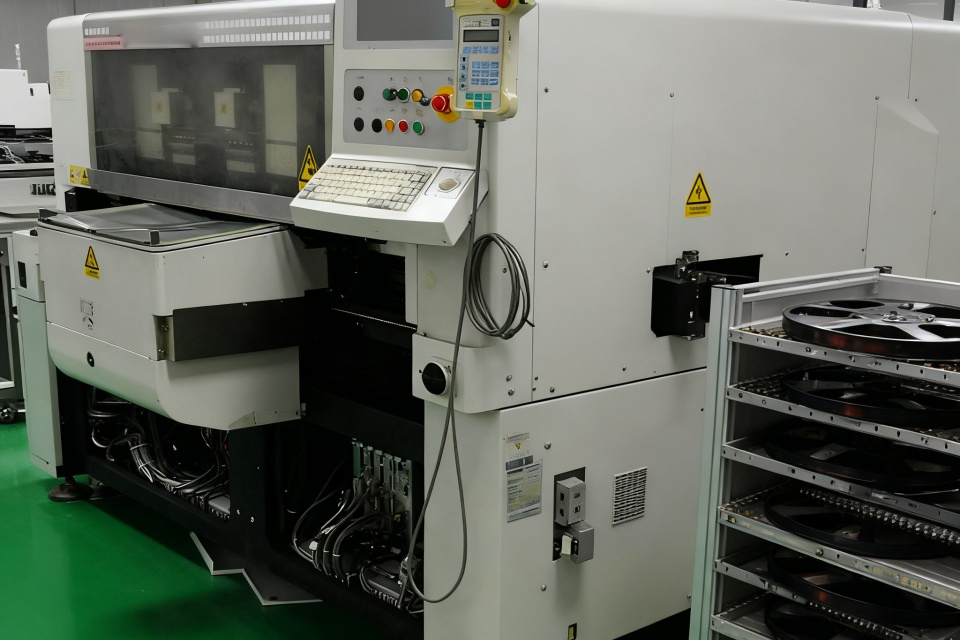
Intend the positioning maker finishes one board every 22 secs, while the reflow oven can approve one board every 35 secs at the validated profile and required spacing. The line cycle is 35 secs.
Not 22.
The placement maker will certainly wait, load a barrier, or overload the downstream process. Including one more placement component may boost capital cost without increasing delivered result.
When evaluating industrial pick and place equipments, determine throughput with the actual bill of materials, feeder plan, nozzle modifications, vision time, board-transfer time, bad-mark handling, replenishment losses, and transitions. Marketed parts per hour rarely represent a combined manufacturing change.
The oven needs the exact same honesty. Board pitch, thermal mass, heated length, conveyor speed, exhaust security, air conditioning, and product adjustments all influence useful capacity.
Assimilation Control Table
| Control Point | What Must Be Verified | Failure When Separated | Approval Target |
|---|---|---|---|
| Board transfer | Size, thickness, rail elevation, direction, clearance | Jams, bounce, element shift | Repeated transfer without get in touch with or alter |
| Device handshake | All set, active, obstructed, and fault states | Gaps, double feeding, accidents | Tested in normal and fault conditions |
| Board identification | Barcode, item ID, course | Wrong dish or program | One deducible ID across the line |
| Время цикла | Real board cycle and stove pitch | Starving or blocking | Secure takt at the specified item mix |
| Placement recipe | Revision, feeders, element library | Missing out on, revolved, wrong parts | Validated before very first manufacturing board |
| Thermal recipe | Zones, belt speed, atmosphere | Cold joints, overheating, voids | Approved account on production boards |
| Refine feedback | SPI, placement, AOI results | Repetitive flaws without correction | Data connected to board, equipment, and dish |
| Transition control | Program, feeders, paste, stencil, oven dish | Mixed manufacturing | Regulated first-article launch |
| Mistake healing | Board place and maker state | Avoided or duplicate handling | Documented reboot sequence |
Machine Communication: SMEMA Is Not Enough
Typical SMEMA user interfaces are useful for basic upstream-ready and downstream-ready signalling. They do not lug the richer product information required for contemporary routing, dish verification, traceability, and diagnostics.
IPC-HERMES-9852 was produced for machine-to-machine communication in SMT setting up. Variation 1.6, released in July 2024, expanded board-transfer information and added equipment-capability queries. It is created to complement IPC-2591 Attached Manufacturing facility Exchange. Testimonial the main IPC-HERMES-9852 details.
As opposed to just signalling that a board is coming, a connected line can connect that board with a special ID, measurements, product type, course, process dish, examination background, and turn down standing.
That stops wrong-program occasions and speeds up root-cause evaluation.
My view is blunt: a new line without traceability architecture is currently practically old.
Positioning Security Prior To Reflow
The board entering the oven must remain in a well-known and repeatable state.
Solder Paste Condition
Positioning accuracy can not rescue a bad paste down payment. Not enough solder produces opens up. Excess solder produces bridges or component movement. Unequal deposits can revolve chip components throughout reflow. Paste countered changes wetting-force equilibrium, so an element positioned specifically on CAD coordinates may still move.
SPI information ought to as a result be associated with downstream placement and AOI outcomes.
Placement Force and Z Elevation
Way too much force can press paste away from pads, damage parts, or create unsteady seats. Inadequate force can leave components badly connected to the paste.
One global force value slouches engineering. Force should mirror plan type, component mass, lead style, paste elevation, substrate support, and nozzle problem.
Feeders, Nozzles, and Conveyor Movement
Worn feeders transform pickup setting. Filthy nozzles generate turning errors, declines, and irregular release. Abrupt starts, hard quits, or poor rail placement can move hefty components before soldering.
A high-speed mounter running damaged feeders is merely an efficient flaw generator.
Reflow Profiling Is Product Design
A reflow oven does not solder according to zone setpoints. It solders according to the temperature experienced by each joint on the PCB.
Those are various.
An area might be readied to 180 ° C while a high-mass port lead remains much cooler. A tiny passive on the very same board might approach air temperature level promptly. Copper distribution, package mass, guards, pallets, filling, ambience, and thermocouple setting all influence the genuine account.
A 2024 research of duplicated solder reflows found that the profile has to be selected according to the warmth capability of components and substrates. It also noted that paste-manufacturer suggestions vary in preheat time, home heating price, top period, and height temperature level. See the 2024 reflow research.
For usual lead-free tin-silver-copper alloys, liquidus is commonly around 217– 221 ° C, while peak temperature levels often drop around 235– 255 ° C depending on paste, setting up mass, coatings, and component limitations. Kester additionally advises maintaining time above liquidus listed below 90 seconds for many tin-silver-copper applications. Review Kester’s lead-free reflow guidance.
These are beginning points, not approval requirements.
A confirmed account ought to tape rising slope, saturate practices, time over liquidus, optimal temperature level, board delta-T, cooling incline, conveyor rate, ambience, area setups, and loading problems. Use a calibrated термопрофилировщик для пайки with thermocouples on representative high-mass, low-mass, edge, centre, and hidden-joint locations.
Profiling an empty stove verifies virtually nothing.
Picking the Reflow Oven
Extra zones are not immediately far better. Less areas are not automatically cheaper.
The appropriate oven gives enough controlled heated size to develop the called for profile at manufacturing speed. A short oven may reach peak temperature just by utilizing hostile slopes or slowing the belt. Hostile inclines raise thermal-stress danger; sluggish belts limit outcome.
When comparing reflow stoves, examine warmed size, independent top and bottom control, cross-belt uniformity, cooling ability, change management, nitrogen usage, exhaust demands, conveyor repeatability, product clearance, software application, and maintenance gain access to.
Air reflow suits numerous settings up. Nitrogen can boost wetting and broaden the process window for difficult surfaces or great attributes, however it adds operating expense. Vacuum reflow can decrease nullifying in power electronics, QFNs, LEDs, and thermal pads, yet it can not make up for poor stencil layout, paste chemistry, or pad geometry.
Getting a vacuum cleaner oven without taking care of deposition is an expensive means to maintain the initial problem.
Evaluation Needs To Shut the Loophole
Post-reflow AOI can identify bridges, opens, tombstoning, polarity mistakes, lifted leads, and noticeable solder issues. Concealed joints might require X-ray.
However evaluation data is important just when it attaches back to the procedure.
The line must associate defects with the printer, pattern, paste batch, SPI dimensions, placement device, feeder, nozzle, head, stove recipe, conveyor rate, time, and board identification number.
Without that connection, groups say from memory. With it, they can figure out whether an offset started with paste enrollment, feeder discussion, positioning improvement, conveyor activity, or reflow forces.
That distinction saves days.
Market Pressure Elevates the Cost of Bad Assimilation
IPC reported that European EMS profits expanded 11% in 2023, with PCBA manufacturing getting to a record EUR57.3 billion. Read IPC’s European EMS market record.
SEMI predicted in July 2024 that semiconductor assembly and product packaging equipment sales would certainly increase 10% to $4.4 billion for 2024. See the SEMI devices forecast.
Even more investment indicates much more capability and much less resistance for poor return, weak traceability, or slow transitions.
The one-upmanship is not owning more makers. It is making them act as one system.
Ideal SMT Line Configuration by Manufacturing Design
Model lines require adaptability, quick shows, wide part handling, affordable changeovers, and strong first-article control. Court them by transition time and first-pass success, not maximum speed.
High-mix lines require barcode-driven directing, feeder confirmation, automated width change, dish securing, and self-displined first-article authorization. Their greatest threat is processing item A with item B’s program, pattern, paste, or stove recipe.
High-volume lines require well balanced takt time, steady thermal loading, feeder capability, preventative maintenance, and fast mistake healing. Simulate the line with actual demand, intended maintenance, replenishment, nozzle cleaning, paste handling, evaluation testimonial, and product shifts.
Nobody creates at pamphlet speed for a whole shift.
Appointing Examinations That Reveal Weak Integration
Do decline a line due to the fact that it generated ten easy boards.
Examination maximum and minimal board sizes, high- and low-mass items, full oven loading, obstructed downstream problems, placement blockages, barcode failures, recipe inequalities, turned down boards, emergency stops, and reactivate recovery.
After that change products.
Validate every recipe shift, track each board through positioning, reflow, and assessment, and repeat thermal profiling under typical manufacturing loading. Approval ought to gauge continual good-board outcome, not one equipment’s quickest cycle.
Appointing should be uneasy. That is the point.
Regularly Asked Inquiries
Just how does the SMT setting up procedure job?
The SMT assembly process is a regulated production series in which solder paste is published on PCB pads, parts are positioned by computerized devices, the booming board passes through a verified reflow account, and inspection systems verify positioning and solder-joint quality prior to testing or downstream setting up starts.
The full line may also consist of loading, barcode recognition, SPI, buffering, AOI, X-ray, discharging, repair directing, and electrical testing. Product identity and recipe control must continue to be consistent throughout every phase.
What is pick and place and reflow combination?
Pick-and-place and reflow combination is the worked with control of board transfer, product identification, positioning dishes, takt time, barrier capability, thermal settings, mistake states, and high quality comments so every PCB enters the oven properly booming, traceable, mechanically stable, and matched to an authorized reflow program.
It includes conveyors, equipment handshakes, barcode information, recipe locking, thermal profiling, assessment comments, and documented recovery after quits or faults.
What is the very best SMT line setup?
The best SMT line configuration is the arrangement whose printing, assessment, placement, buffering, reflow, and post-reflow abilities are stabilized versus the real item mix, called for return, transition regularity, part range, board measurements, traceability rules, and readily available maintenance resources rather than a single maker’s promoted full throttle.
Model plants normally require adaptability. High-mix plants require dish discipline. High-volume plants require well balanced capability, feeder accessibility, thermal security, redundancy, and quick healing.
Does reflow immediately appropriate lost parts?
Reflow self-alignment is the surface-tension-driven activity of a part towards pad equilibrium while solder is molten, but it is just a minimal adjustment result and ought to never ever be utilized to validate poor paste enrollment, excessive positioning countered, unsteady handling, inaccurate impacts, or weak process control.
Little offsets might remedy when pad geometry, solder quantity, wetting forces, and component discontinuations are balanced. Huge errors, polarity errors, missing out on parts, or unequal down payments will not be dealt with accurately.
The amount of areas should a reflow stove have?
The appropriate number of reflow oven zones is the number called for to produce a secure thermal account across the heaviest and lightest locations of the setting up at the target throughput, while maintaining sufficient control margin for filling variation, atmosphere, air conditioning, item modifications, and future board families.
Zone count alone is a weak purchasing statistics. Warmed length, thermal uniformity, control resolution, cooling efficiency, upkeep gain access to, and validated conveyor speed issue more.
Should the reflow stove be faster than the pick and area equipment?
The reflow oven need to have sufficient usable conveyor capacity to accept boards at the positioning line’s sustained period without triggering upstream blocking, too much spacing, unstable thermal loading, or account compromise, while retaining get capacity for regular deductions, changeovers, and future manufacturing growth.
Rated optimal belt rate is irrelevant if the authorized profile requires a much slower setting. Compare actual board pitch at the validated account with the true placement cycle.
Build the Line Around Great Boards
The complete SMT circulation starts with paste and placement, yet it does well or falls short through reflow, evaluation, and process responses.
Balance the takt. Profile actual boards. Lock the dishes. Track every identification number. Test mistake healing before manufacturing beginnings.
And never ever puzzle motion with output.
For a production-specific devices setup or line-balance review, share the board dimensions, expense of products, target result, alloy, assessment demands, and product combine with the SMT equipment call team.